
  1. Roles/

Scientific advisory board member

Contributors


James Blair

James Blair, PhD is the Director of the Center for Neurobehavioral Research. He is an expert in the neurobiology of emotion, aggression and antisocial behavior and has published more than 200 scientific manuscripts on this and related topics. Dr. Blair received a doctoral degree in Psychology from University College London in 1993 under the supervision of Professor John Morton. Following graduation he was awarded a Wellcome Trust Mental Health Research Fellowship that he held at the Medical Research Council Cognitive Development Unit for three years. Subsequently, Dr. Blair moved to the Institute of Cognitive Neuroscience, University College London. There, with Uta Frith, he helped form and co-lead the Developmental Disorders group, and was ultimately appointed Senior Lecturer. Dr. Blair Joined the NIMH Intramural Research Program in 2002. He joined Boys Town as Center Director in August 2016. He is currently President of the Society for the Scientific Study of Psychopathy as well as the acting vice-chair of the Board of Scientific Advisors for the National Courts and Sciences Institute (the Institute that educates judges on scientific topics relevant to the courtroom).

Tom Denson

Tom Denson is a Professor in the School of Psychology at UNSW. He is an experimental social-personality psychologist. His primary research focus is on the causes, consequences, and prevention of anger-driven aggression. Anger and aggression are serious problems throughout the world.

Kent Kiehl

Kent Kiehl’s laboratory has worked diligently along with correctional facilities in New Mexico and beyond to establish the world’s largest database of brain data from incarcerated populations. We utilize a state of the art mobile scanning unit which can be deployed to remote locations, reaching populations for which functional brain imaging might otherwise be impossible or severely impractical. These resources and relationships have been instrumental in the investigation of mental health issues that are particularly prevalent in those who are incarcerated, including psychopathy, antisocial personality disorder, substance abuse, and externalizing disorders. We maintain several ongoing projects with an overall goal of achieving a better understanding of the interaction between brain function, genetics, and environmental factors ultimately informing improved interventions and prevention strategies and promoting better mental health as a whole.
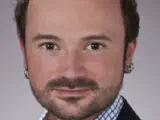
Georg Starke

Georg Starke is a research associate at the Chair of Ethics of AI and Neuroscience at the Institute for History and Ethics of Medicine at the Technical University of Munich. As a philosopher and licensed physician, he conducts research at the interface of medical ethics, AI ethics and neuroscience. He is particularly interested in the connection between trust, explanation and understanding. He is currently working on AI-based neurotechnologies, combining fundamental philosophical and ethical questions with empirical work in this field.

Essi Viding

Essi Viding is professor of Developmental Psychopathology at the Clinical, Educational, and Health Psychology Research Department, Division of Psychology and Language Sciences, UCL. She is the Pro Vice Provost for the Mental Health and Wellbeing Grand Challenge at UCL, together with Prof Argyris Stringaris, and chairs UCL’s Children and Young People’s Special Interest Group. She co-directs a research group, the Developmental Risk and Resilience Unit (DRRU), with Prof Eamon McCrory.